

A few years ago, most offices followed a fixed model: long-term leases, assigned desks, and a standard daily routine. But by 2025, professional expectations have shifted toward flexibility, collaboration, and performance-driven environments.
Coworking spaces are a major part of this transformation. With remote and hybrid work becoming the norm, businesses now prefer flexible, membership-based workspaces over traditional leases. According to JLL, flexible workplaces are expected to make up 30% of all office space by 2030, and in 2024, the global coworking market was worth $22.01 billion—and it’s expected to reach $25.11 billion by the end of 2025.
So, what is a coworking space in practical terms? It’s a shared, fully equipped workspace where professionals from different companies work independently but within a structured environment. The coworking space meaning goes beyond shared desks—it includes flexibility, community, technology, and scalable infrastructure that supports modern work styles.
If you’re exploring whether coworking fits your needs, this guide will cover what coworking spaces are, their pros and cons, pricing models, and how to choose the right one for you.
Let’s explore!
Contents
- 1 Coworking 101: What Exactly Is Coworking?
- 2 Who Is Coworking Designed For?
- 3 What Makes a Coworking Space Different?
- 4 The Rise of Coworking Spaces
- 5 Types of Coworking Spaces
- 6 Core Features and Amenities
- 7 Key Benefits of Coworking Spaces for Modern Business
- 8 Understanding the Costs and Pricing Models of Coworking Spaces
- 9 What Affects the Price?
- 10 Common Myths About Coworking Spaces Debunked
- 11 Why Coworking Is Expanding in 2026
- 12 How to Choose the Right Coworking Space
- 13 Exploring Othership’s Coworking Solutions
- 14 Final Thoughts: Work Smarter in Flexible Workspaces
- 15 FAQs About Coworking Spaces
- 15.1 1. Why are coworking spaces effective?
- 15.2 2. What types of events are best for coworking spaces?
- 15.3 3. Are coworking spaces only suitable for tech startups and freelancers?
- 15.4 4. What is the difference between a coworking space and a traditional office?
- 15.5 5. Can I use a coworking space for just one day or a single meeting?
Coworking 101: What Exactly Is Coworking?
What is a coworking space at its operational core? It is a shared workspace where professionals work independently while remaining part of a broader community environment. Members gain access to essential office infrastructure without managing the space themselves.
A coworking office space provides high-speed internet, meeting rooms, ergonomic furniture, utilities, cleaning services, and shared amenities through a predictable monthly membership. Unlike traditional corporate leases that require multi-year commitments, upfront fit-out investments, and ongoing facility management, coworking spaces operate on flexible terms with all-inclusive pricing.
This means businesses avoid long-term lease risks, surprise maintenance costs, and capital expenditures. Finance teams benefit from predictable monthly expenses, while teams enjoy a professional environment designed for both focused work and collaboration. In practical terms, the modern coworking space definition combines flexibility, cost efficiency, and built-in workplace infrastructure into one scalable solution.

Unlike a home office or traditional lease, coworking spaces offer flexibility, community, and built-in amenities that support productivity.
They often include:
- Open seating areas
- Dedicated desks
- Private offices
- Meeting rooms
- Lounge zones
Coworking spaces are great for both quiet time to focus and talking about ideas with other people.
Who Is Coworking Designed For?
Are coworking spaces worth it for different professional categories? The model works because it adapts to distinct work requirements rather than forcing uniformity. Why coworking works stems from operator expertise in serving multiple demographics simultaneously within the same building.
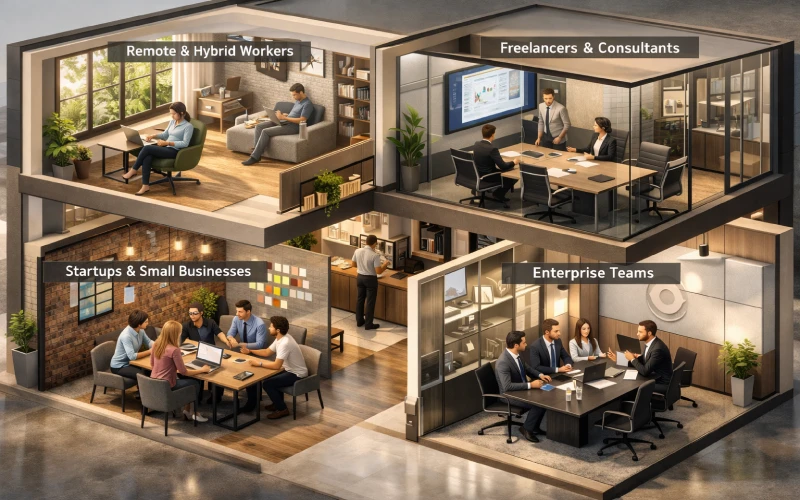
Coworking for Remote and Hybrid Workers
The establishment of hybrid work policies becomes simpler through flexible workspace solutions that provide workspaces closer to employee residences. Team members don’t experience increased fatigue from their commutes because they can arrive at their jobs whenever necessary. It’s easier for professionals who want to choose where they work to stay because they can work when they want.
Coworking for Freelancers and Consultants
Using professional meeting spaces gives independent professionals instant trustworthiness. The benefits of coworking space include reception services and access to conference rooms, which clients can use for their presentations. Meetings in coffee shops give a different impression than meetings in boardrooms, which have all the audio and video equipment they need.
Coworking for Startups and Small Businesses
Early-stage businesses save money by not buying furniture or building costs. Benefits of coworking spaces include immediate infrastructure access without diverting resources from product development. Teams are more focused on customers than on managing the facility.
Coworking Solutions for Enterprise Teams
Flexible workspace solutions let big companies open satellite offices without having to sign a master lease. Enterprise teams quickly enter markets with a lot of talent while testing the long-term viability of their ideas. One benefit of coworking spaces is that they lower the risk of moving into new areas.
What Makes a Coworking Space Different?
There are many different work setups out there, but each comes with its own set of challenges and trade-offs. Coworking combines the structure of an office, the flexibility of remote work, and the community you often miss at home.
|
Workspace Type |
Pros |
Cons |
| Traditional | Long-term stability | High cost, rigid setup |
| Home Office | Comfort, convenience | Isolating, lots of distractions |
| Hot Desking | Flexible, low cost | No guaranteed spot or personalization |
| Office Hoteling | Great for drop-ins | Less community or consistency |
| Executive suites | Private, professional | Expensive, lacks social interaction |
| Coworking Spaces | Balance of structure and freedom | Can vary by location and crowd |
The Rise of Coworking Spaces
The coworking movement began in the early 2000s. Independent workers sought connection without giving up autonomy.
Since then, coworking has expanded across the globe, driven by digital tools and the rise of freelance and remote work.

In 2025, coworking isn’t just a trend anymore. It’s how the world gets work done! This shift closely mirrors insights from the State of Global Hiring, where flexible, distributed work models are becoming the norm worldwide.
Types of Coworking Spaces
Coworking spaces are not one-size-fits-all. Each space offers different setups to support how you work.
- Hot Desk – More flexible in an open coworking space. Just grab any available desk (ideal for casual users)
- Dedicated Desk – A personal desk reserved for you (great for routine)
- Private Office – Enclosed space for individuals or teams (privacy + focus)
- Virtual Membership – Access to a business address and limited use
- Industry-Specific Spaces – Designed for creatives, start-ups, health pros, etc.
- Hybrid / Suburban Spaces – Ideal for remote teams outside city centres
Pro Tip: Browse the Othership Listings to compare spaces by location, vibe, and perks.
If you’re still unsure what is coworking office space, think of it as a flexible alternative to traditional offices, tailored to modern workstyles.
Core Features and Amenities
Modern coworking spaces are designed to boost both productivity and well-being. You’ll often find:
- High-speed Wi-Fi & printing
- Meeting rooms & phone booths
- Lounge areas & kitchen access
- Coffee, tea, and snacks
- Monitors, chargers, and AV setups
- Lockers & secure entry
- Event spaces & wellness rooms
The goal is to give you everything you need to focus, connect, and grow without the stress of managing an office yourself.
Key Benefits of Coworking Spaces for Modern Business
The benefits of coworking spaces describe the key advantages businesses and professionals experience when working in shared, flexible office environments.

Let’s explore the major benefits of coworking and why it continues to attract freelancers, startups, and remote workers:
- Flexibility: Scale workspace usage as your team grows or shrinks without long-term lease commitments.
- Predictable Costs: One monthly fee often covers utilities, cleaning, maintenance, and amenities.
- Lower Financial Risk: Empty desks during slow periods do not become fixed overhead costs.
- Professional Environment: Maintain focus and impress clients in a structured workspace.
- Built-In Community: Network, collaborate, and share ideas with other professionals.
- Work-Life Balance & Wellness: Separate work from home life and reduce isolation.
- Business Credibility: A professional coworking address strengthens brand perception.
Understanding the Costs and Pricing Models of Coworking Spaces
Coworking space costs are flexible membership-based fees that give businesses access to shared or private workspaces without long-term lease commitments. Here’s a quick guide:

Common Pricing Structures
- Day Pass – Pay-per-day access for quick or one-time visits
- Monthly Membership – Hot or dedicated desk, billed each month
- Private Office – Full office space rented monthly
- Add-ons – Extras like lockers, printing, and event access
Typical Coworking Space Prices:
- Hot Desk: $100–$250/month
- Dedicated Desk: $300–$600/month
- Private Office: $600–$1,500/month
- Day Pass: $15–$40/day
- Hourly Access: Great for short bursts of work or casual users
Pro Tip: Prices are higher in big cities like NYC or London. Smaller towns are usually more affordable.
Example Pricing from Popular Providers
- Essential Plan: Free monthly, pay-per-booking
- Premium Plan: ~$24/month (includes discounts and perks)
- All Access Plan: ~$350/month (unlimited entry and free upgrades)
U.S. Nationwide Average
- Day Pass: ~$29/day (range: $17–$41)
- Dedicated Desk: ~$300–$367/month
- Private Office: ~$500–$680+ (can go over $1,200 in metro areas)
Urban Co-Works
- Day Pass: ~$35/day
- 5-day bundle: ~$150
- Full month: ~$350
- Private Office: ~$650–$2,000/month (varies by size and perks)
What Affects the Price?
If you want…
- A central location → it may cost more
- 24/7 access → expect a higher fee
- A private office → you’ll pay more than for hot desks
- Perks like snacks for employees, events, or phone booths → these can add up
- A big brand experience → top coworking names often charge premium rates
Common Myths About Coworking Spaces Debunked
Coworking facts always go against what most people think about shared workspaces. Modern facilities are designed for diverse work styles with dedicated quiet zones throughout buildings. The coworking experience varies significantly by operator and specific location selection.

Are coworking spaces worth it despite persistent negative stereotypes? Yes, because myths don’t usually match up with what big companies are really doing in the market. Knowing how things really are helps skeptical professionals make better choices when they are looking at their options.
Coworking Spaces Are Too Noisy
The wrong idea is that all coworking spaces are like noisy coffee shops with no soundproofing. In reality, operators set up quiet areas where people can work on knowledge tasks that need their full attention. There are also phone booths available in many areas, and you can immediately make private calls.
Coworking Is Only for Freelancers or Startups
The enterprise teams are now the fastest-growing type of members for most of the major operators. In each of the major cities, enterprise employees work in private offices and team spaces that are exclusive to them. Lawyers, accountants, and medical professionals use professional spaces every day.
The number of people who use the service has changed a lot in the last five years. Nonprofit organizations access quality workspace within budget constraints. Government agencies place employees in coworking facilities for trial programs.
Coworking Is Overly Social and Distracting
Members focus on productivity because it serves as their main goal, which they pursue despite available socialization opportunities. People interact with each other in specified communal spaces, which do not interfere with work areas that require concentration. Members establish social norms that guide them on how to handle interruptions and request permission to work together.
Operators design their spaces to create environments that enable users to concentrate while maintaining community access. Events occur in common areas while workspaces maintain professional norms. Workers engage with the community during breaks while protecting deep work periods.
Coworking Spaces Are Expensive
Look at how much a coworking space costs compared to the costs of a traditional office with all the utilities and maintenance. Coworking can help you save money and get rid of management problems and capital calls. Monthly costs that are easy to plan for take the place of building ownership costs that are hard to plan for.
Why Coworking Is Expanding in 2026
As hybrid work becomes more common, the need for dedicated and professional workspaces grows. Employees need to be able to get to good places to work that are close to their homes. Flexible workspace solutions accommodate professionals who rarely visit centralized headquarters.

Remote work has fundamentally altered corporate real estate strategy permanently. Companies abandoned return-to-office mandates in favor of choice and flexibility. This is why coworking spaces are on the rise as companies are adjusting their real estate to suit the era.
How to Choose the Right Coworking Space
Choosing the Right Coworking Space refers to evaluating different coworking environments to find one that supports your workflow, budget, and business growth. The right choice improves productivity, collaboration, and long-term flexibility.
How to Choose:
- Understand your work style (privacy vs. open collaboration)
- Define priorities (location, budget, amenities, networking)
- Visit the space before committing (tour or day pass)
- Compare practical details:
- Community vibe
- Industry mix
- Meeting room access
- Growth flexibility
- Membership terms
Who Benefits Most from Coworking:
- Freelancers & Creatives – Structured routine and inspiration
- Startups & Small Teams – Cost savings and collaboration
- Remote Workers – Clear work-life separation
- Enterprises – Hybrid and flexible workspace solutions
- Digital Nomads – Reliable workspace while traveling
- Consultants & Coaches – Professional client meeting spaces
If you value flexibility, collaboration, and convenience, coworking may be exactly what you need!
Exploring Othership’s Coworking Solutions
Othership’s flexible workspace solutions link businesses with trusted choices all over the world. You can book immediately through the platform, so you don’t have to wait for lengthy negotiations or delays in paperwork. It’s simple to access workspaces that are specifically arranged for you with simple digital interfaces.
Streamlined procurement uses technology to eliminate the need for a traditional brokerage relationship. Companies can now have access to flexible workspace solutions in multiple cities through one account. There are a lot more options and less work for the administration to do.

Othership Teams
OtherShip Teams help growing businesses find dedicated space in places that are always available. Teams can operate in a professional environment and still change their team size. The solution provides a balance between being fixed and being able to change as businesses grow.
Othership Instant Workspace
Employees can access workspaces immediately, which allows them to address urgent requirements for workspace access without having to go through application and approval processes. The system provides you with immediate access so that you can initiate meetings and projects that require professional environments immediately. Business opportunities continue to move forward because there are no issues with the infrastructure that would hold them back.
Final Thoughts: Work Smarter in Flexible Workspaces
Coworking spaces are more than just a passing trend. They’re a smart and sustainable way to work in a world that’s always changing.
You get flexibility, a sense of community, and the right tools to grow. All without the heavy costs or long-term commitments of a traditional office.
So… what do you really need? A quiet place for calls? A buzzing room full of creatives? 24/7 access? Onsite coffee? Private offices?
Before you commit, think about what makes a good coworking space.
FAQs About Coworking Spaces
1. Why are coworking spaces effective?
They combine professional infrastructure with social connection opportunities that home offices lack. Members can use amenities that would be too expensive to buy on their own for occasional use. The environment signals professionalism to clients while providing work-life separation that improves mental health.
2. What types of events are best for coworking spaces?
People naturally engage in workshops that teach new skills and in networking events that help the coworking community grow. Industry-specific meetups make use of the professional diversity already in the space. Social events like coffee tastings also help members connect and build relationships outside of work.
3. Are coworking spaces only suitable for tech startups and freelancers?
No. Enterprise employees are now the fastest-growing group of members for major operators. Professionals from law, finance, healthcare, and nonprofit sectors regularly work in high-quality coworking spaces. A visit to any major operator quickly shows the professional diversity across the space.
4. What is the difference between a coworking space and a traditional office?
Coworking spaces operate on flexible membership terms instead of long-term, capital-heavy leases. Traditional offices require significant time and upfront investment to build and maintain. The right choice depends on whether you value flexibility or prefer greater control over your space.
5. Can I use a coworking space for just one day or a single meeting?
Yes, most operators sell day passes that let you use their services for a short time without having to commit to a monthly plan. Renting a meeting room lets clients give presentations without having to be full members. Short-term options let you change your workspace needs and requirements as they come up.


You must be logged in to post a comment.