

Today, coworking spaces have grown way beyond just sharing desks and couches. Companies can pick from different setups based on how much privacy, space, and equipment they need, depending on their budget.

This article highlights different types of coworking spaces in today’s flexible office market, how they meet specific business needs, and helps managers to find the right workspace for business success. It compares these spaces based on privacy, cost, adaptability, and business growth.
Contents
Types of Coworking Space
Types of coworking space refer to the structural and operational variations within the coworking industry. These spaces change based on their layout, how you will pay, who it was built for, and how much privacy they can offer.

Instead of thinking that all coworking spaces are the same, businesses can understand how each model is built differently.
Open Coworking Spaces
Open coworking spaces are shared offices with no walls, built in order to work together in one big room. Among all the different types of coworking spaces, this is the most flexible and affordable starting point. It is usually the first kind of collaborative workspace people try when they stop working from home or a coffee shop.
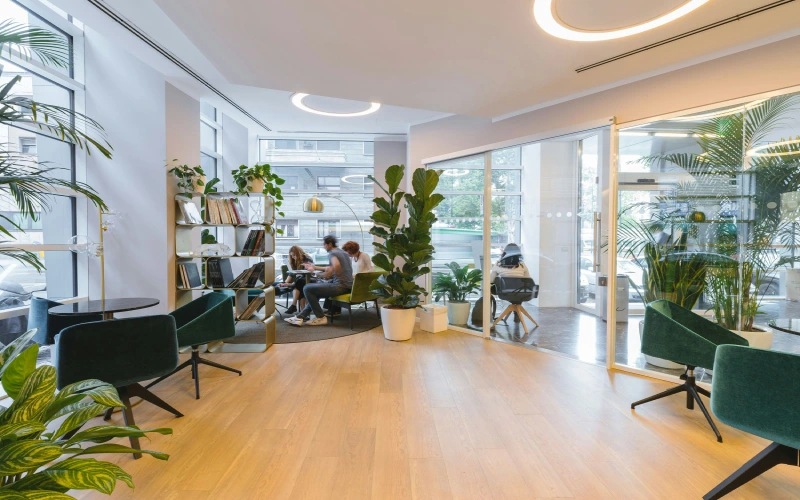
The structure of an Open coworking space features a large room with very minimal walls. You usually pay for them using a membership card offering a daily or monthly pass. These spaces are cheaper than private coworking offices because everyone shares the same furniture and equipment in an open coworking space.
Private Offices Within Coworking Spaces
Private offices inside coworking spaces are separated and dedicated exclusively to one company or team. Only you have the keys, and the space is yours alone, even though you still get to use the rest of the shared building. This shows how these types of coworking spaces have changed; it’s not just big open rooms anymore.

Now, there are secure workspaces, private spots dedicated to businesses that need their own space but still want a flexible lease. Private coworking offices are lockable rooms where you can change the layout and desk setup to fit your team. They are better than traditional office leases because you don’t have to sign long-term contracts or spend a lot of money upfront.
Corporate Coworking Spaces
Corporate coworking spaces are professional offices built specifically for large teams and fast-growing companies. In the world of different types of coworking workspaces, this option offers the most flexibility for big businesses. It bridges the gap between a regular shared office and a traditional corporate headquarters.

Corporate coworking spaces are built with private floors, high-speed business internet, their own meeting rooms, and secure entry areas. Companies choose these to avoid spending huge amounts of money on long-term office buildings. This is a smart, flexible workspace for businesses expanding into new cities or countries, with a stronger focus on professionalism and productivity than community culture.
Minimal Coworking Spaces
Minimal coworking spaces are basic offices that give you the essentials of an office infrastructure. They usually offer a desk, Wi-Fi, and electricity without any fancy extras. In a broader classification of the different types of coworking offices, these are the cheapest options available.

The structure of these spaces is often small, or in other terms, a small coworking space under this model operates within very few meeting rooms or lounge areas. They cost less than regular open coworking spaces because they don’t offer things like free coffee or networking parties. Unlike corporate coworking spaces, these trade a high-end look for a low price.
Lifestyle Coworking Spaces
Lifestyle coworking spaces are places for work with things like fitness, art, or socializing. They often put desks right next to coffee shops, gyms, art studios, or party spaces. Out of all the types of coworking spaces, this one focuses most on the experience of its users.

It proves that collaborative working spaces have grown from just being professional offices into places where community and lifestyle-centered spaces are. Prices for these spaces range from mid to premium, depending on the features of the brand and its perks. Unlike minimal coworking spaces, lifestyle spaces give up desk room to make way for big lounges and social areas.
Industry-Specific Coworking Spaces
Industry-specific coworking spaces are built for people who work in the same field. They provide special tools, legal resources, or technical equipment that regular offices don’t have. This model is a “specialty” option since, instead of being for everyone, these are customized for specific groups.
For example, a media workspace might have recording studios and video editing rooms. The price is usually higher because of the expensive equipment. And since privacy and flexibility may change from place to place, the specialization of each office is what makes them different.
Venture or Accelerator Coworking Spaces
Venture coworking spaces are built to help startups and new companies grow fast. They offer more than just a desk; they provide mentors, connections to investors, and programs that speed up a business’s success. Among the different types of coworking spaces available, this one focuses on the growth stage of a company.

It links office design with a community of entrepreneurs. These spaces act as collaborative working spaces rather than just a place to sit. Membership may involve application screening or cohort-based programs. Unlike flexible workspace solutions, you can also get expert advice or strategic guidance from here.
Meeting and Event Spaces
Coworking spaces are meeting and event spaces that are mainly utilized in scheduled gatherings and not in day-to-day desk work. These are meeting rooms, training spaces, and presentation halls that have professional collaboration tools. This type is a wider classification of coworking spaces, extending the use to individual workstations.

It is indicative of the fact that the types of coworking spaces that currently exist comprise event-based and hybrid spaces. Mechanically, the modern meeting spaces consist of soundproof rooms, modular seating arrangements, smart displays, and video conferencing systems. It facilitates hybrid meetings, workshops, client presentations, and corporate training sessions.
Virtual Office Coworking
Virtual office coworking business address, and mail handling service without the need to occupy the office on a daily basis. This format takes the taxonomy of types of coworking spaces beyond the physical space. It demonstrates the fact that the flexible coworking space models may work without permanent on-site operations.

The framework promotes remote-first companies. A virtual office has address registration, mail forwarding, and optional booking of meeting rooms, unlike the open or private models. Its model is useful for startups, consultants, and distributed teams who would want to have cost control and geographic credibility.
Cost of Renting Coworking Space
The cost of renting coworking space depends on the workspace type, location, facilities, and membership model. Pricing ranges from hourly meeting room reservations to monthly leasing for private offices. Evaluating cost without a structural comparison can lead to an incorrect workspace choice.
For example, open coworking spaces are the cheapest entry mode due to shared seating. Private coworking offices are more expensive because the space is allocated and safe. Corporate coworking spaces have high pricing due to enterprise infrastructure and long-term capacity planning.
A small coworking space with minimal infrastructure can save money but offers fewer facilities. These contrasts show that flexible workspace solutions provide price flexibility based on structural design. Compared to traditional office leases, coworking reduces upfront capital expenditure.
How to Choose the Right Coworking Space
Choosing the right coworking space means matching it to your business needs, team size, privacy expectations, and budget. The right fit can improve productivity, flexibility, and long-term value, especially as your business grows and your needs change.

When comparing options, consider:
- Location and accessibility
- Privacy and workspace layout
- Meeting room availability
- Internet reliability
- Contract flexibility
- Space to grow with your team
What makes a good coworking space is how well it supports your daily work, your team’s comfort, and your future plans.
Advantages of Different Coworking Space Types
The various types of coworking models provide varying benefits based on what is most important: flexibility, cost, privacy, or collaboration. Open coworking rooms tend to be the cheapest and the most social, whereas private offices provide businesses with confidentiality, branding, and are less difficult to coordinate without being tied to a long-term lease.

Other formats are outcome-based. The space of lifestyle and industry-focused spaces is inclined towards community, networking, and industry-specific resources, whereas venture coworking introduces the dimension of mentorship and startup-funding provision.
Meeting and event rooms are suitable for making on-demand bookings with robust conferencing capabilities, and virtual offices reduce overhead costs without losing the appearance of professional business. Therefore, the best model is one that is based on the requirements of the organization.
Conclusion
Coworking has grown far beyond simple desk sharing. Today, businesses can choose from different types of coworking spaces based on their needs for privacy, flexibility, budget, and team size.
In this guide, we explored the major coworking space models from open coworking environments and private offices to corporate, lifestyle, and industry-specific spaces. Each model supports different business goals and working styles.
By understanding these options, companies can choose the right coworking spaces to support productivity, collaboration, and long-term growth in the modern flexible workplace.
FAQs: About Types of Coworking Spaces
What are the different types of coworking spaces?
Open desks, private coworking offices, corporate floors, and basic setups are the main types of coworking spaces. It also includes lifestyle hubs, industry-focused centers, accelerators of startups, meeting and event venues, and virtual office designs.
What are the advantages of coworking spaces?
The benefits of coworking spaces are flexibility, minimized capital costs, scalability, and access to collaborative working spaces.
How much does a coworking space cost?
The price of renting coworking space varies based on workspace type, location, and model of membership. Open layouts are cheaper than private coworking offices, but corporate settings are very expensive due to infrastructure and exclusivity.
What makes a good coworking space?
Business alignment will be the factor that determines the quality of a good coworking space. The adaptable coworking office meets team size, privacy needs, cost, and level of development.


You must be logged in to post a comment.