

Meeting optimization is not only about saving time. It also involves creating meaningful, interactive rooms where teams are at their best. In this manual, “Optimize Meetings: How to make meetings more productive,” you will learn easy techniques to make every session focused, efficient, and meaningful for everyone involved.
Contents
- 1 Why Meetings Fail and What Holds Back Team Productivity
- 2 Core Principles of Highly Productive and Effective Meetings
- 3 How Workspace Design and Room Choice Improve Meeting Outcomes
- 4 How Meeting Room Booking Software Enhances Meeting Productivity
- 5 How Othership Helps Teams Run More Efficient and Productive Meetings
- 6 Best Practices for Running Efficient and Outcome-Driven Meetings
- 7 Choosing the Right Meeting Space for Different Meeting Purposes
- 8 Why Coworking Teams Need Smarter Meeting Management Processes
- 9 Book a Productive Meeting Space With Othership
- 10 FAQs: Optimizing Meetings for Better Productivity
- 10.1 1. Why do most workplace meetings fail to create real outcomes?
- 10.2 2. How does unclear scheduling reduce overall meeting productivity?
- 10.3 3. What role does meeting purpose play in running effective meetings?
- 10.4 4. Why does choosing the right meeting room impact collaboration quality?
- 10.5 5. How does meeting room booking software improve scheduling accuracy?
- 10.6 6. Can workspace design really affect how productive meetings are?
- 10.7 7. Why are coworking teams more vulnerable to meeting inefficiencies?
- 10.8 8. What defines a truly productive meeting in modern workplaces?
Why Meetings Fail and What Holds Back Team Productivity

Many meetings fail not because teams lack talent, but because the processes around meetings are poorly designed. Without structure, clarity, and intent, meetings become time-consuming conversations rather than effective decision-making tools. These problems are often compounded when teams rely on manual or fragmented methods instead of structured room booking software.
Room booking software improves meeting productivity by removing uncertainty before a meeting begins. When teams can clearly see room availability, capacity, and suitability in advance, they spend less time resolving conflicts, relocating spaces, or adjusting plans at the last minute. Meetings start on time, participants stay focused, and discussions remain aligned with their intended outcomes.
By understanding how structured scheduling and room booking systems support better preparation and predictability, teams can address productivity blockers systematically instead of accepting meeting inefficiency as unavoidable.
Common Workplace Challenges That Lower Productivity
A good number of meetings die before they are started. When a team has to discuss something, they often do not know the outcomes or decisions needed, or what information is most valuable.
This lack of structure is one of the biggest obstacles to bold meeting productivity. Unclear agendas lead to loss of track of discussions and a loss of focus. Thus, companies end up wasting hours weekly on discussions with minimal value.
These uncertainties conflict with the true, productive meeting goal, which is to organize people, clarify next steps, and make productive decisions. But team meetings often turn into status reports, while business meetings spiral into irrelevant talks.
Individuals lose focus, and results suffer when participants do not know the meeting’s goal. This is even worse in fast-paced settings, where teams must be outcome-focused with clear and sharp messages.
Another significant challenge is the interruptions, such as alerts, tardiness, malfunctioning technology, and noises undermine concentration. One failure will interrupt the chain of a process and make teams restate information or have to explain themselves further.
These built-up inefficiencies reduce pace and diminish the aggregate output throughout the working day. So to optimize meetings, workplaces must recognise that structure is not available. Even high-quality teams do not work well without clear preparation and predictability of the process.
How Poor Scheduling and Room Mismanagement Cause Inefficiency
The other most common reason for meeting failure is scheduling and room assignment. The meeting is disjointed or delayed when the wrong room has been selected, which is too small, too noisy, or does not have the required equipment. Teams waste time moving, problem-solving or making it up.
Even more disruptions are caused by the case of double bookings and cancellations at the last minute. The employees come prepared to work only to find that another person has taken their place. This is particularly harmful in coworking arrangements wherein sharing of access to rooms is done by more than one business.
Teams lose track and energy when the rooms are not booked according to the purpose, like strategy talks, client calls, and hybrid presentations. These challenges emphasized a critical factor in bold meeting productivity: workspace logistics matter just as much as content. Choosing the correct environment directly influences engagement and outcomes for every meeting.
Improving scheduling processes, aligning room selection with purpose, and eliminating logistical friction are foundational to understanding and applying real, bold, and productive meeting meaning.
Core Principles of Highly Productive and Effective Meetings
Highly productive meetings follow a repeatable set of principles that prioritize clarity, relevance, and outcomes. These principles ensure that meetings are intentional rather than habitual and that time spent together leads to measurable progress.
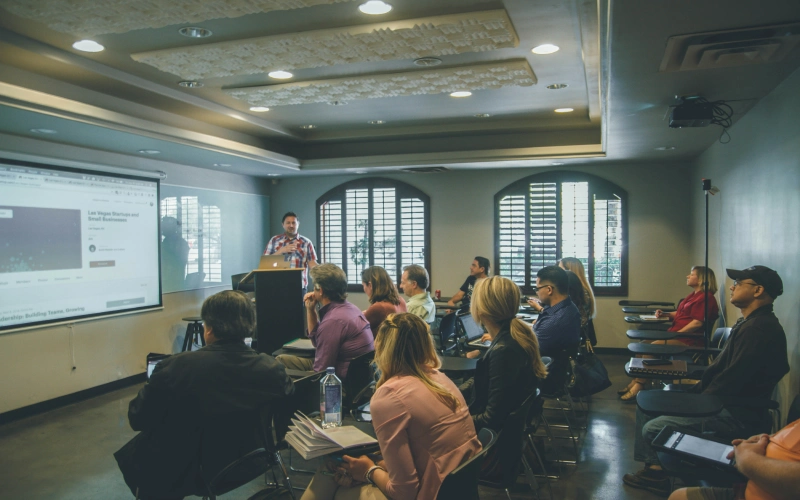
Establishing Purpose and Clear Outcomes
Clarity is the key to any daring, successful meeting. Leaders need to determine what success would be like before the meeting takes place. The objective, be it decision making, brainstorming or reporting on a given progress, determines the mood of the entire session.
Teams that master boldly how to make meetings more productive always begin with results in mind. This principle is used in the case of an internal alignment meeting, a meeting with clients, or even project planning. Understanding results brings about focus and keeps the discussion on track.
Transparency also minimises unjustifiable attendance by the attendants. When the purpose is stated up front, only the relevant contributors are added; noise is eliminated, and efficiency is enhanced. Such a style makes an organisation much more disciplined, which boosts alignment and speeds up the decision-making process.
Choosing Participants Who Drive Progress
An effective meeting is not related to how many people are crowded in the room but in what they are relevant to. Thoughtfully choosing participants is essential in creating effective meetings. Each attendee must contribute value- adding to the meeting, by bringing in wisdom, influencing decisions, or taking follow-up actions.
When the wrong individuals are attracted, the conversations will be disoriented. The absence of key people stops the progress of the group. The balance matters. Choosing participants carefully is an underrated way to boost meeting productivity. This ensures time is spent on progress, not vague roles or irrelevant noise.
Maintaining Timing, Structure, and Focus
Any successful meeting is based on structure. Leaders who know how to make meetings more productive use specific techniques to maintain flow:
- Time-block each agenda item.
- Expected discussion vs. expected decision.
- Limit interruptions.
- Document resolutions on a real-time basis.
- Have action steps with direct owners.
Form is what converts the discussions into deliverables and makes the fragmented discussions to become planned, fruitful ones.
How Workspace Design and Room Choice Improve Meeting Outcomes
Meeting productivity is influenced not only by people and agendas but also by physical space. The design, layout, and functionality of a room directly affect focus, participation, and communication quality.
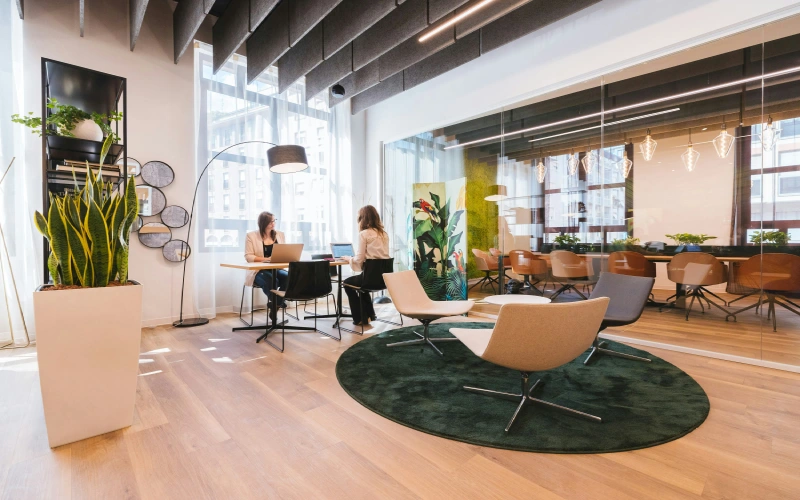
Matching Meeting Objectives With the Right Space
Space layout has a direct impact on the effectiveness of teamwork and communication. The kind of room to be selected must always be in line with the purpose of the meeting. For example:
- Strategic meetings must be in secluded rooms.
- Artistic classes like painting and writing are best done in open and flexible rooms.
- Client-facing business meetings require professional, polished environments.
- Internal team meetings benefit from rooms with whiteboards, screens, and collaboration tools.
Understanding how to run a meeting starts with knowing what environment supports it. Choose the right room: When the purpose fits the space, interaction improves, discussion is richer, and results are more understandable.
Creating Environments That Support Collaboration and Focus
Attention and comfort of participants are influenced by room layout, lighting, seating arrangement, acoustics, and equipment. Strong, effective meeting strategies consider these factors ahead of time.
A well-considered space will support collaboration, limit distractions, and help participants stay focused. When planning a hybrid call or an in-person brainstorm, picking the right room is important for running an effective meeting. Good design minimizes friction and creates an environment where ideas and decisive actions will naturally appear.
How Meeting Room Booking Software Enhances Meeting Productivity
Scheduling inefficiencies and room conflicts are among the most common causes of meeting delays and disruptions. Without reliable systems, teams lose momentum before meetings even begin.
Eliminating Double Bookings and Scheduling Conflicts
In workplaces where many people share spaces, scheduling conflicts remain a major challenge to meeting productivity. Double bookings interfere with schedules, make last-minute room changes, and reduce the team’s ability to optimize meetings effectively. These issues are worse in coworking spaces, where companies depend on shared equipment for stable work processes.
This is where the room booking system is used. It provides teams with real-time information on the availability of rooms and avoids duplication of groups of rooms that have been chosen. Teams avoid wasted time and protect the flow of team meetings and business meetings with clear booking records and live updates.
When organisations integrate structured booking tools, they reduce unexpected interruptions and strengthen their overall approach to bold how to make meetings more productive.
Ensuring Equipment and Room Capacity Fit the Meeting Purpose
One of the largest contributors of time wasted is going to a room that does not suit the meeting. The lack of display screens, poor Wi-Fi, lack of hybrid conferencing tools, or even uncomfortable seats force teams to adjust in real time or postpone schedules, creating misalignment with resources.
With modern, bold meeting room booking software, these issues are preventable. Teams can filter rooms by capacity, equipment, type, or meeting purpose. Finding the right space leads to a better start, more effective interaction, and clear alignment with the desired result.
This improves bold meeting productivity and reflects the authentic bold productive meeting meaning—a meeting defined as a gathering that uses time efficiently, fosters collaboration, and makes decisions that advance work.
Using AI and Real-Time Data to Improve Scheduling Accuracy
The modern-day working environments are fast, and the manual system of administering schedules is usually not able to keep up. Utilising artificial intelligence-powered features in room booking tools for teams optimizes meetings by analysing patterns, predicting peak demand, and suggesting ideal times or spaces for different meeting types.
Real-time data allows the teams to comprehend:
- The most commonly used rooms
- In case of peak meeting hours
- The areas that suit particular technical requirements
- Things to do to decrease idle time or unnecessary meetings
How Othership Helps Teams Run More Efficient and Productive Meetings

Smarter Space Selection Across Multiple Coworking Locations
Othership offers platform unity: booking rooms in multiple coworking hubs, which teams can rely on to have a reliable, stable space. This simplifies planning and improves overall meeting productivity for groups that work in flexible or distributed arrangements.
The interface of Othership allows employees to search for the types of rooms, their occupancy and additional services in a few seconds. This makes it easier to plan business meetings, strategy sessions, or workshops. Othership reinforces the real productive meeting meaning—structured, intentional gatherings that use time wisely.
Improving Hybrid Team Coordination With Consistent Tools
The challenges that can present in hybrid teams include a lack of coordination in terms of scheduling, inconsistencies in equipment, and a lack of coordination in the capabilities of rooms. These variables are standardized through Othership.
By utilising the bold meeting room booking software across areas, teams coordinate more smoothly, prepare more effectively, and avoid last-minute disruptions.
Reducing Meeting Delays With Reliable, Real-Time Booking
Delays in meetings are frequent occasions when individuals arrive without making a reservation, discover that a room is taken, or the available space does not accommodate their agenda. Othership eliminates these issues with availability tracking in real time and reliable room verification.
The booking process gives instant confirmation to users, and rooms update their status on all connected devices. This keeps successful meetings on time and aligned with the intended outcomes.
When leaders don’t have to troubleshoot rooms, they can facilitate clearer discussions, encourage better decision-making, and reinforce high standards for collaboration in workplace environments.
Best Practices for Running Efficient and Outcome-Driven Meetings
Even with the right space and tools, meetings require strong execution to be effective. Preparation, facilitation, and follow-through determine whether meetings create value or stall progress.
Preparing Agendas and Materials Before the Meeting
Effective meetings start earlier than when one comes into the room. It is better to plan an agenda and have prioritized issues to maintain concentration, organisation, and responsibility. Leaders who comprehend bold leading effective meetings know that distributing materials beforehand helps participants understand the information and are ready to meaningfully contribute.
Team meetings and business meetings drift, decisions slow, and misunderstandings multiply without preparation. An outline of the agenda is used to establish the direction of discussion and ensure that everyone is oriented towards the required result.
Leading Discussions With Clarity and Purpose
Strong facilitation is one of the most powerful and effective meeting strategies. Leaders must:
- Maintain pace
- Side conversations: Redirect side conversations.
- Clarify decisions
- Summarize key points
- Ensure equal participation
These techniques define boldly how to have productive meetings, where discussions lead directly to results. It leads to clarity that removes the confusion, hastens the process of agreement and reinforces the workplace alignment.
Closing Meetings With Decisions and Action Steps
The post-meeting phase is the decision on whether a meeting was really facilitating value. Leaders need to ensure that, before termination, they have established:
- Decisions made
- Tasks assigned
- Owners identified
- Deadlines set
- The expectations of follow-ups
Choosing the Right Meeting Space for Different Meeting Purposes

Rooms for Strategy and Planning Sessions
The privacy, good acoustics, and disruption ought to be minimal in strategy meetings. These meetings are usually very sensitive, long-term planning and top-level decision-making.
Choosing the right room for an important meeting ensures that leaders can think clearly and collaborate without interruptions. A dedicated planning space also reinforces the value of structured thinking, supporting stronger, bolder meeting productivity across the organisation.
In selecting a room for a strategy-focused work meeting, teams should prioritize spaces with whiteboards, stable Wi-Fi, and seating that supports long discussions. The room’s setup should encourage clarity, focus, and informed decision-making, which are the key ingredients for business meeting success.
Creative Collaboration and Workshop Spaces
Not all meetings are formal. Creative workshops and brainstorming sessions, as well as collective planning, need open and revitalising spaces. Layout flexibility encourages the movement, group work and interactive format that generates creativity. Such environments encourage new ideas, be it in teams coming up with new processes, formulating campaigns, or concurring on internal efforts.
Softer seating, writable walls, and modular furniture help contributors feel more engaged and open for creative team meetings. The right space enhances participation and directly amplifies bold meeting productivity, making every conversation more dynamic and purposeful.
Technology-Enhanced Hybrid Meeting Rooms
Hybrid work has become a new normal in modern work. Hybrid meeting rooms should also be equipped with high-quality cameras, directional microphones, consistent internet connectivity, and big screens so that all attendees, both remote and face to face, feel equally engaged. A workplace that promotes hybrid communication lowers friction and provides smooth and consistent communication.
This setup is essential for any business meeting involving remote stakeholders. It also elevates the quality of team meetings where cross-location coordination is necessary.
When technology works effortlessly, the flow of the meeting stays strong, supporting better outcomes and enhancing overall meeting productivity.
Spaces Suitable for Social Distance Meetings
There are teams that might still need meeting spaces that are distance-friendly, bigger rooms with more spacing, a touchless entry system or better ventilation. These rooms are ideal for essential training, onboarding sessions, and any important meeting requiring extra space.
Whereas distancing introduces logistical challenges, the appropriate environment maintains clear communication. When teams feel comfortable, their ability to focus improves, which enhances work meeting effectiveness and supports the broader organizational goal of maintaining high productivity regardless of physical constraints.
Why Coworking Teams Need Smarter Meeting Management Processes
Coworking spaces are dynamic and rapid, and have several teams that reserve rooms during the day. Because these organisations depend heavily on shared resources, the need to boldly optimize meetings becomes even more critical. The large demand level implies that rooms are quickly occupied, and unless the systems are operational, the process of scheduling is disorganised.

To maintain reliable access, coworking teams must use structured processes and tools—particularly bold meeting room booking software. Visibility is done in real time so that everyone knows what and when. This will eradicate speculation, avoid duplicates and make work predictable.
Accurate scheduling directly increases bold meeting productivity by eliminating wasted time and reducing friction across shared spaces.
Ensuring Consistency in Meeting Quality Across Locations
Coworking settings thrive on efficiency, transparency, and fair access. Structured processes protect these values, making meetings smoother, faster, and more predictable.
There are a large number of coworking groups that work on various levels or floors. The quality of meetings in one place and the other is highly diverse without any uniform procedures. There are rooms that can have excellent equipment, and there are those which are underutilised. There might be places with the support of hybrid meetings, and some spaces should be used in discussions inside the company.
This inconsistency makes it harder to maintain high standards of boldness in making meetings more productive. With the right room booking software, teams get standardized information about room features, capacity, and equipment—across all sites. This allows individuals to choose the best space for their needs and ensures that bold meeting productivity remains high, no matter where the team works.
Working environments based on coworking are built on efficiency, openness, and equality. The values are safeguarded by structured processes that make the meetings less challenging, quicker, and predictable.
Book a Productive Meeting Space With Othership
In the busy work environment of modern times, teams require effective and trusted tools as well as space to stay organized, smooth, and functional. Whether you’re planning strategy discussions, hybrid calls, workshops, or essential updates, choosing the right space can significantly increase bold meeting productivity and support stronger collaboration.
Othership also offers its teams access to high-quality and seamless meeting rooms in multiple coworking locations. With intuitive features, real-time availability, and dependable scheduling, its platform empowers organizations to optimize meetings without the frustration of double bookings, misaligned rooms, or last-minute disruptions. For teams seeking to have productive meetings, access to consistent, well-equipped spaces makes all the difference.
With smarter booking tools and streamlined workflows, your organization can commit fully to what defines a truly bold, productive meeting: conversations that lead to decisions, actions, and meaningful progress.
If your goal is to run effective meetings that strengthen alignment and reduce friction, Othership equips your team with the right space, the right tools, and the right structure—every time.
FAQs: Optimizing Meetings for Better Productivity
1. Why do most workplace meetings fail to create real outcomes?
Most meetings fail because they begin without defined outcomes, clear structure, or aligned participants. When agendas are vague and goals are unclear, discussions drift into status updates instead of decision-making. Over time, this lack of preparation reduces focus, weakens accountability, and wastes valuable work hours.
2. How does unclear scheduling reduce overall meeting productivity?
Poor scheduling disrupts momentum before a meeting even starts. When teams face double bookings, last-minute room changes, or unsuitable spaces, they lose time and mental energy. These logistical issues fragment discussions and prevent teams from entering meetings with the focus needed for meaningful progress.
3. What role does meeting purpose play in running effective meetings?
Meeting purpose acts as the anchor for structure, participation, and flow. When leaders define whether a meeting is for decisions, planning, or collaboration, discussions stay focused and relevant. Purpose-driven meetings also limit unnecessary attendance, ensuring only contributors who move work forward are involved.
4. Why does choosing the right meeting room impact collaboration quality?
Meeting rooms directly influence attention, interaction, and clarity. Strategic discussions require privacy, creative sessions benefit from flexible layouts, and hybrid meetings demand strong technical setups. When room selection aligns with meeting intent, teams collaborate more naturally and reach outcomes faster.
5. How does meeting room booking software improve scheduling accuracy?
Meeting room booking software eliminates uncertainty by providing real-time availability, capacity details, and equipment visibility. Teams can reserve spaces that fit their exact needs, avoiding conflicts and last-minute disruptions. This structured approach keeps meetings on time and preserves workflow continuity.
6. Can workspace design really affect how productive meetings are?
Yes, workspace design directly shapes engagement and focus. Lighting, acoustics, seating, and layout determine how well participants communicate and concentrate. Thoughtfully designed meeting environments reduce distractions and create conditions where ideas and decisions emerge more efficiently.
7. Why are coworking teams more vulnerable to meeting inefficiencies?
Coworking teams rely heavily on shared spaces, which increases the risk of scheduling conflicts and inconsistent room quality. Without standardized processes and real-time visibility, meetings become unpredictable. Structured booking systems help coworking teams maintain fairness, efficiency, and consistent meeting standards across locations.
8. What defines a truly productive meeting in modern workplaces?
A productive meeting is one that converts time into decisions and actions. It starts with preparation, runs with structure, and ends with clear ownership and next steps. When supported by the right space, tools, and scheduling systems, meetings become drivers of alignment rather than interruptions to work.


You must be logged in to post a comment.