

The shift toward flexible work patterns in the contemporary corporate environment has brought massive logistical challenges. Since companies are transitioning between remote and office presence, the physical space should be handled with accuracy that cannot be maintained by manual processes. Usually, the collective setting of work areas is the primary point of conflict.
Many businesses frequently encounter the “phantom meeting” phenomenon, where spaces appear occupied on digital calendars, but remain physically empty without properly implementing a meeting room booking system. Today, meeting room scheduling software solutions form an essential part of infrastructure. The contemporary office lacks transparency, and teams use space inefficiently, leading to a sense of scarcity of rooms.
This resource division causes organisational disillusionment and operational disorientation. By implementing a meeting room booking system, an organisation establishes a single source of data for its physical assets. This blog highlights how these systems move beyond digital calendars to provide quantifiable operational and business values through structured logic and real-time data integration.
Contents
- 1 What Is a Meeting Room Booking System?
- 2 How a Meeting Room Booking System Works
- 3 Key Benefits of a Meeting Room Booking System
- 4 Business and Management Benefits
- 5 Benefits for Different Workplace Stakeholders
- 6 Meeting Room Booking System vs. Google Calendar
- 7 When Businesses Need a Dedicated Meeting Room Booking System
- 8 How to Choose the Right Meeting Room Booking Software
- 9 Conclusion: Why Meeting Room Booking Systems Matter in Modern Workplaces
- 10 Frequently Asked Questions About Meeting Room Booking Systems
- 10.1 What are the main benefits of a meeting room booking system for modern workplaces?
- 10.2 How does a meeting room booking system reduce scheduling conflicts?
- 10.3 Is a meeting room booking system better than using Google Calendar alone?
- 10.4 How does meeting room booking software improve office space utilisation?
- 10.5 Can meeting room booking systems support hybrid and flexible work environments?
- 10.6 What features should a meeting room booking system include for growing teams?
- 10.7 How does a meeting room booking system help facilities and office managers?
- 10.8 When should a company move from manual scheduling to a room booking system?
What Is a Meeting Room Booking System?
A meeting room booking system operates in a holistic management layer rather than a mere digital calendar tool. It is a centralised platform designed to manage the reservation, allocation, conference areas, and collaborative zones. Unlike a standard digital calendar, which treats a room as a passive invitee, a meeting room scheduling system treats the room as a managed resource with specific attributes, limitations, and governance rules.
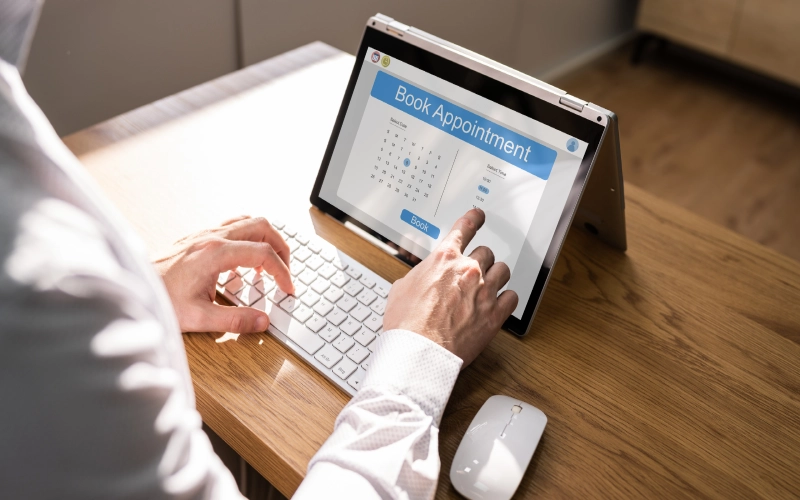
A professional room booking system serves as a channel between the user’s intent and the physical reality of the office. It also includes availability logic (rules that prevent double-booking rooms). This prevents overlapping entries and also allows room assignments to be made based on the particular needs of the meeting, like capacity or technical equipment.
This centralised scheduling environment offers a management structure that will determine how, when and by whom space may be used so that workplace governance is maintained in all departments.
How a Meeting Room Booking System Works
Instead of relying on manual recordings or static spreadsheets, the meeting room scheduler software operates through a continuous feedback loop between the dashboard and the database. Whenever a user requests a space, the system links the request against real-time room availability management data to make sure that the space is physically and digitally available for the requested duration.
This is regulated by a series of automated triggers (preset system actions). For instance, when a user reserves a space using meeting room scheduling software, the system immediately notifies all synchronised endpoints, such as mobile apps, desktop interfaces, and physical room displays. This immediate synchronisation makes a mere booking tool actually an integrated framework that determines each movement in a physical space.
Real-Time Room Availability and Scheduling
A live room availability management serves as a dedicated meeting room scheduler that eradicates the waiting time from manual systems. When a session is cancelled or ends early, the conference room scheduling software identifies the vacancy and immediately returns the space to the available inventory. This auto-release feature is a vital aspect of the system to help avoid wasting functional space on ghost meetings, so that the virtual reflection of the office is always made to match the physical.
Booking Rules, Permissions, and Policies
A sophisticated room booking management system functions as a digital administrator. Meeting room management software is not simply checking for empty slots; it applies a layer of organisational governance. This is done to make sure that there is allocation of resources in order of priority and necessity, and not on a first-come, first-served basis, which in most cases is inefficient.
For example, the system can enforce certain access rules: a large boardroom may require at least six people to be booked, or the design department may have priority for high-tech creative suites. The software automates these permissions, relieving office managers of policing duties. It also streamlines reservations, preventing space hoarding and ensuring equal opportunity for all employees to book rooms.
Calendar, Workplace, and Space Integrations
Compatibility is the hallmark of a modern conference room software system. A standalone tool that exists in a vacuum may create tension; however, a workplace scheduling system with an existing communication stack enhances user adoption. Basically, it is about data synchronisation across the entire space booking software landscape.
When these systems work together, workflows become transparent. Any change in a project management tool or calendar invite flows directly through to room displays and the central database. This connection allows team members at tablets, mobile applications, or their main workstations to see consistent, reliable space usage data.
Key Benefits of a Meeting Room Booking System
When an organisation replaces manual processes with a structured meeting room booking system, it immediately improves operations. These benefits result directly from substituting human error with algorithmic precision.

Eliminates Double Bookings and Scheduling Conflicts
Scheduling overlap most commonly causes conflict in offices. To reduce meeting room conflicts, a meeting room scheduling system uses a collision detection feature. In manual environments, two individuals might think they have booked the same space when viewing an uncoordinated list.
The system validates reservations and reserves the slot in the network. This central data source removes social friction and lost productivity as teams no longer have to negotiate meeting spaces in real time or cancel meetings due to scheduling confusion.
Improves Meeting Room Utilisation
Most companies struggle not with lack of space, but lack of visibility. Meeting room utilisation software lets businesses compare office space use with their actual needs. This improvement is commonly done through the mechanism of check-in (confirmation of arrival at a room).
In case an individual does not ensure his or her presence in the room within a specified period, the system will automatically reserve a no-show, and the reservation will be released. This guarantees that the physical space is never underutilised but rather is in constant use. Moreover, it increases the inventory of the office in effect, without the need to spend a lot of money on real estate development.
Saves Employee Time and Reduces Friction
Searching for a workplace can consume valuable time in the workday. Meeting room reservation software simplifies this search by allowing employees to quickly locate spaces based on specific criteria.
By using a room reservation system, employees avoid walking floors or sending multiple internal messages to find a collaboration space. The cumbersome process becomes just a couple of clicks, allowing teams to focus on meeting content instead of venue arrangements. This change reduces administrative tension and fosters a freer, more attentive workplace atmosphere.
See how Othership Makes It Simple to Book Your Collaborative Space and discover an easy way to organise your meeting rooms and get rid of scheduling hassles.
Business and Management Benefits
While operational benefits improve workforce experience, implementing a meeting room booking system also provides significant strategic value at executive and administrative levels. These systems help leadership adopt empirical management by converting physical movement into digital data, replacing anecdotal observation.
For those overseeing organisational health, meeting room booking software provides financial efficiency and planning advantages. Without such tools, decision-makers often struggle to visualise the performance of their most costly asset—real estate. Facilities management software treats the office as a dynamic environment and optimises it using performance metrics.
Data-Driven Decisions on Space Usage
A lack of a centralised system may compel facilities managers to make guesses on the rooms that are in demand and the rooms that are abandoned. Through meeting room utilisation software, every booking, cancellation, and “no-show” is logged. This creates a detailed map of office space utilisation.
It may be found that, although 10-person boardrooms are at all times booked, they are often occupied by only two or three individuals. The data enables the management to think of the option of redesigning the floor plan to incorporate additional small huddle rooms that would literally match the real needs of the employees.
Cost Control and Space Optimisation
Real estate overhead is one of the major concerns in the field of hybrid work. Meeting space optimisation allows businesses to scale their footprint intelligently. By using room management software to track peak demand times, a company might discover it can reduce its total square footage by 20% without impacting productivity.
These savings are a direct contribution to the bottom line, as a transformation of the booking system into a utility, into a financial optimisation tool.
Explore Othership’s Meeting Room Booking Software. Leverage powerful analytics and management tools to optimise your workspace and reduce overhead.
Benefits for Different Workplace Stakeholders
A comprehensive workplace scheduling system affects various departments in distinct ways. To achieve authority, Tru considers how meeting room management software serves the specific needs of different roles within the organisation:

Benefits for Employees
Being aware of the fact that a space is reserved and that it has the required technology will allow one to be better mentally prepared and have a more professional experience holding a meeting.
Benefits for Facilities and Office Managers
These systems will serve as their 24/7 helper. The managers do not have to mediate on the disagreements on the use of a certain room or solely count manually on which rooms require cleaning or maintenance, depending on the frequency of use.
Benefits for IT and Operations Teams
The current systems are highly visible in hardware status. If a conference room software suite is integrated with IoT devices, IT can be alerted before the next meeting even begins when a room’s AV equipment is malfunctioning.
Benefits for Leadership and Finance
Through the expansion of the company, the system can be used to repeat a similar framework when new offices are to be added or when flexible workspaces in various geographical locations are to be handled.
Meeting Room Booking System vs. Google Calendar
One of the main grounds of confusion is whether a normal calendar is adequate in managing rooms. While Google Calendar is an excellent tool for personal time management, it is not the best option when you plan on using room booking software for offices. The comparison reveals that calendars may lack “resource logic.”
A calendar can never implement a check-in policy, cannot offer profound utilisation analytics, and cannot manage sophisticated permissions grounded on user roles. A booking system is used to control the environment whereas a calendar is used to list an event. Due to the inherent characteristics of a calendar, namely an absence of automated release features like those associated with a specialised system, it is very easy to generate shadow bookings; that is, rooms are booked but not actually used.
Organisations also change, and at some point, historical modes of space management will be a burden. Recognising the signals of inefficiency is the first step toward implementing a robust meeting room booking system that supports long-term growth.
When Businesses Need a Dedicated Meeting Room Booking System
Professional room booking software for offices is best used to observe specific operational “red flags.” Upon using a hybrid model, the difficulty of negotiating with the teams to go to the office and work together is exponentially greater if your team has already switched to this hybrid model.
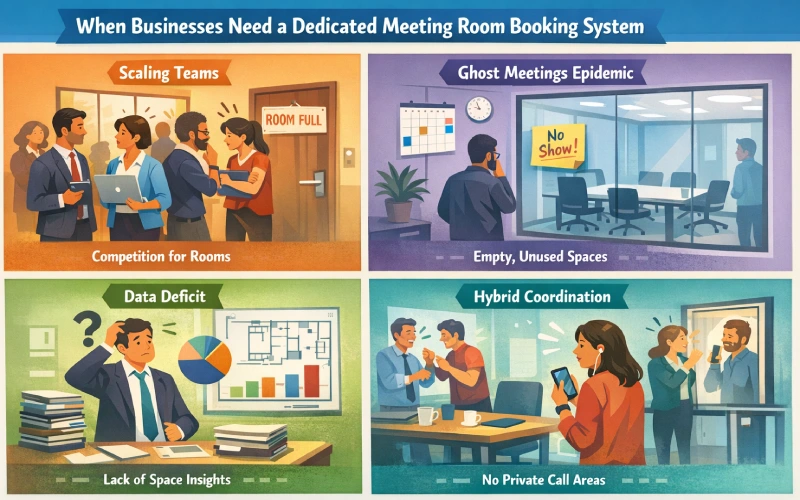
The best meeting room booking system for hybrid work is required for:
Scaling Teams: When headcount increases, it causes competition over shared resources, which results in friction and poaching of rooms.
Ghost Meeting Epidemic: When over 20% of the meetings you set are showing empty rooms, then your existing process is not recapturing the lost space.
Data Deficit: When the leadership is unable to provide answers to the question of how many square feet will be needed to renew the lease next time, then the system must be capable of giving empirical evidence.
Hybrid Coordination: That happens when remote workers come to the office and discover no opportunity to make calls privately or conduct team huddles. This will hurt the workplace experience.
How to Choose the Right Meeting Room Booking Software
Choosing the best meeting room booking software requires a focus on evaluation criteria rather than on brand names. A high-quality conference room booking software should be assessed on its ability to streamline your existing workflow.
When evaluating a room scheduling software, you may consider these factors:
User Friction: How many clicks are required of a team member to get a space?
Hardware Compatibility: Does the software run on existing tablets, or does it need open-source hardware?
Governance Flexibility: Does the system fit your office policies and booking authorisations?
Reporting Depth: Does the analytics dashboard provide actionable insights into office space utilisation?
Conclusion: Why Meeting Room Booking Systems Matter in Modern Workplaces
Implementing a meeting room booking system is a strategic investment in the organisational system of the modern workplace. Businesses can create an environment of control, transparency, and data by going beyond the constraints of simple calendars and manual lists.
These meeting room booking software solutions provide more than just managing doors and tables, but they also foster a culture of respect and efficiency. They provide visibility and enforce fair access, eliminating the overhead of administration that distracts teams. Therefore, an effective system means that the physical office will be an asset that makes co-working possible for each user.
Get Started With Othership’s Meeting Room Booking Software. Transform your office into a high-performance workspace with our intuitive management and booking platform.
Frequently Asked Questions About Meeting Room Booking Systems
What are the main benefits of a meeting room booking system for modern workplaces?
The primary benefits of a meeting room booking system include the elimination of scheduling conflicts, improved transparency of space availability, and the collection of usage data for better real estate planning. The systems also minimise administrative friction and see to it that staff are able to locate and access the correct resources for their use.
How does a meeting room booking system reduce scheduling conflicts?
The system is a centralised gatekeeper that involves real-time synchronisation to ensure against duplication of bookings. It can offer a single source of truth between all devices and physical displays, which means that once a room is booked, it becomes automatically reserved, which makes meeting room disputes less frequent in the organisation.
Is a meeting room booking system better than using Google Calendar alone?
Yes, due to special features that cannot be found in regular calendars, like automated room release (to no-shows), more detailed utilisation data and the ability to tailor the booking rules (e.g. requiring a room to belong to a specific department).
How does meeting room booking software improve office space utilisation?
It recognises underused space and ghost meetings using check-in requirements. By automatically releasing rooms that aren’t physically occupied, the meeting room utilisation software increases the available inventory of the office without adding new square footage.
Can meeting room booking systems support hybrid and flexible work environments?
Absolutely. Having these systems in place is especially useful to accommodate hybrid work, where remote workers can reserve a space before driving to the office, and the managers can see how the office is utilised on other days of the week.
What features should a meeting room booking system include for growing teams?
A team-growth system must also have expandable user permissions, connectivity with popular work tools (such as Slack or Microsoft Teams), and a powerful reporting functionality that will assist in planning the future office growth.
How does a meeting room booking system help facilities and office managers?
It also automates the dragging process of space allocation as well as dispute resolution. The data gives the managers an opportunity to optimise cleaning schedules, plan maintenance, and justify real estate costs, depending on real demand.
When should a company move from manual scheduling to a room booking system?
A firm can switch once they achieve a size where its manual coordination is broken, when remote work and access make it challenging to see them, or when room poaching starts to have a negative effect on team member morale and output.


You must be logged in to post a comment.